


Stablecoins, the cryptocurrencies pegged to fiat currencies like the U.S. dollar to keep their value steady, can still face failures. Several well-known examples demonstrate that maintaining stability is more challenging than it appears. So, how does something designed to be ‘stable’ unravel?
A Historical Review of Stablecoin De-Pegging Incidents
There’s no doubt that these stablecoins have proven useful for transactions, but their success hinges on several factors. Market trust, collateral management, liquidity, and security are essential. If any of these elements falter, even the most promising stablecoin can come crashing down. The following historical overview dives into several stablecoin projects that have faltered over the years.
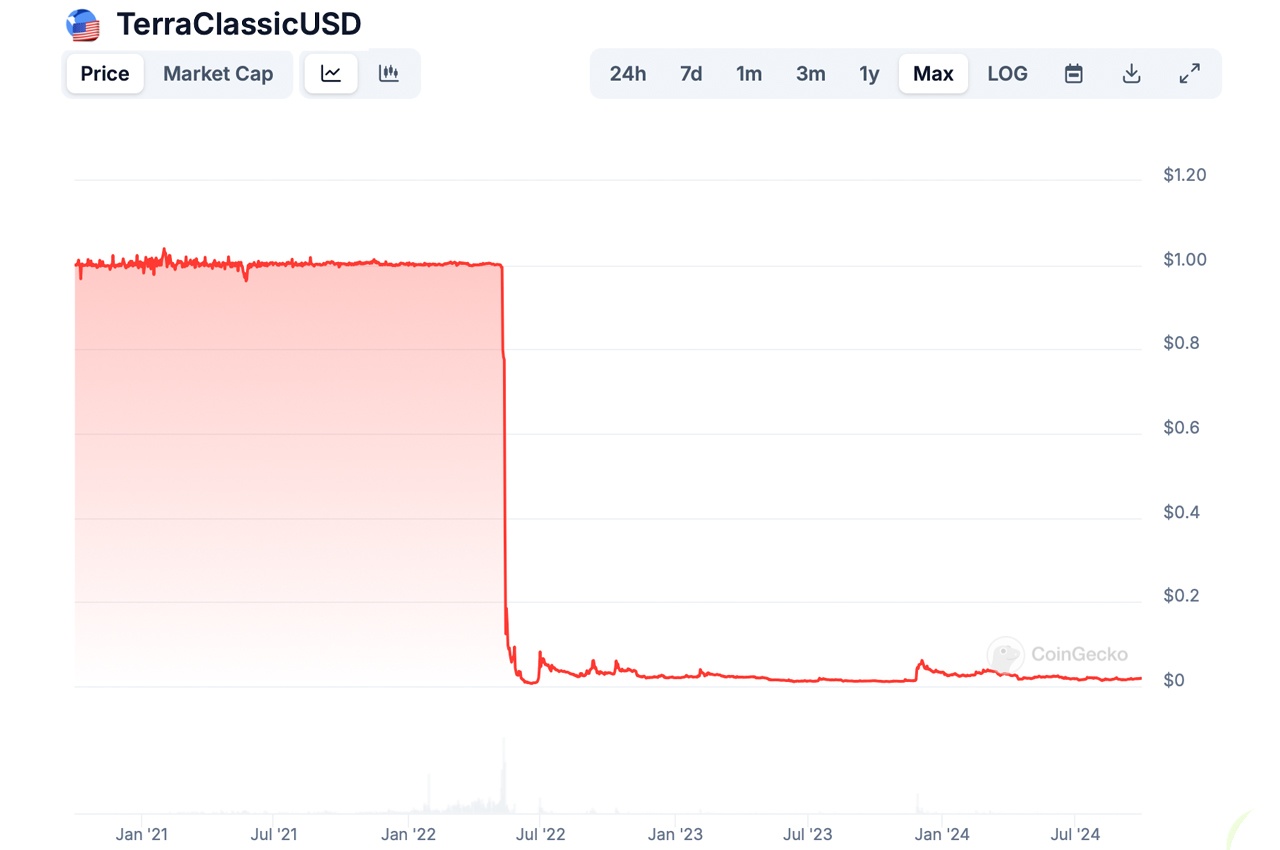
Take Terrausd (UST), for example. This algorithmic stablecoin used a sister token, luna (LUNA), and an algorithm to balance its supply and demand. However, in May 2022, a mass sell-off caused a catastrophic spiral, wiping out UST’s peg to the dollar. The collapse illustrates that algorithmic stablecoins depend heavily on constant market confidence. Once trust fades, the model can’t recover, leading to a major destabilization.
Another way stablecoins can fail is through mismanaged collateral. This is what happened to Iron Finance’s IRON stablecoin in June 2021. Partially backed by both crypto and traditional assets, IRON lost its peg when market panic struck. Large sell orders of TITAN, the platform’s governance token, triggered a rapid price decline. With insufficient collateral to back IRON, it spiraled downward.
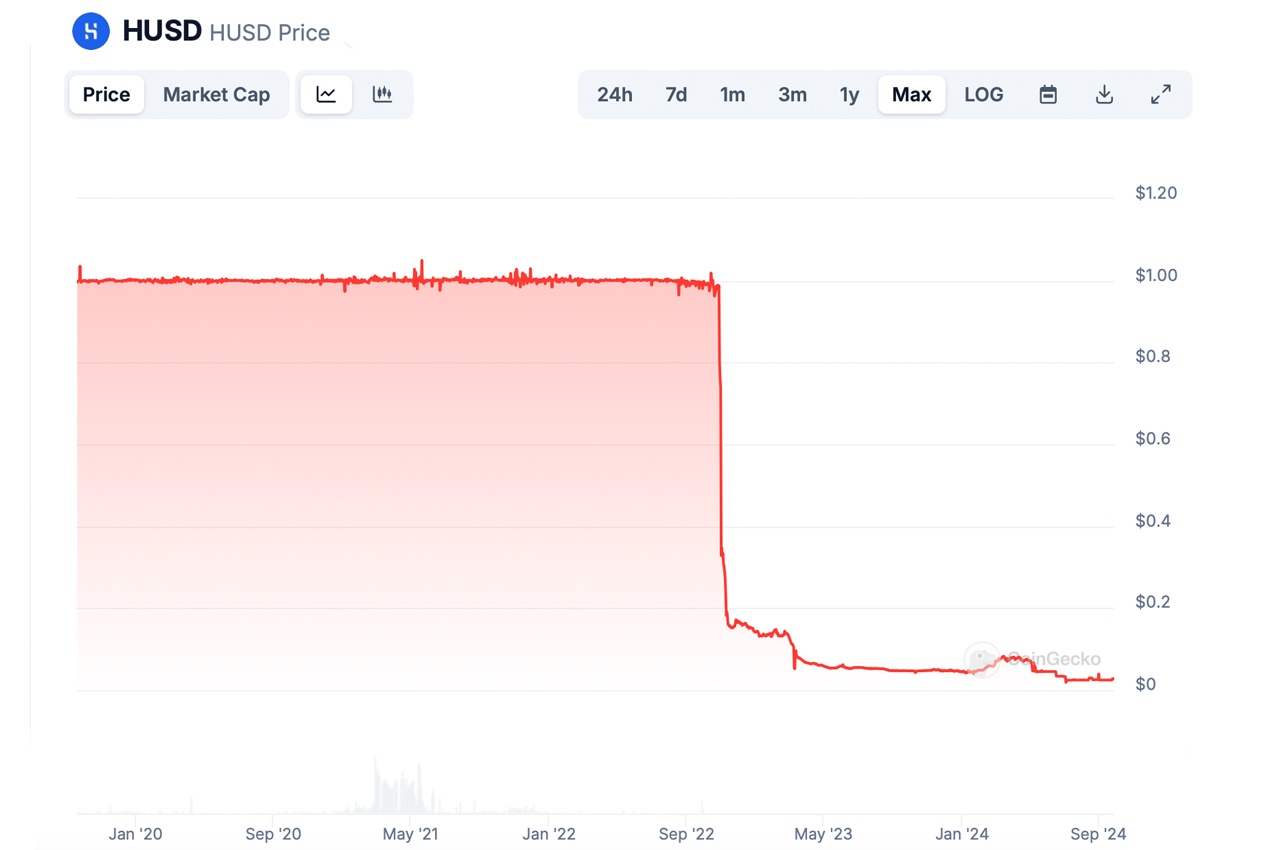
HUSD’s collapse in August 2022 highlights another vulnerability: liquidity issues. When market maker accounts closed, and banking hours didn’t align, the stablecoin faced a liquidity crunch. Liquidity is crucial to absorbing large trades without significant price shifts. Without it, even a minor sell-off can cause market jitters and, ultimately, a loss of the coin’s peg.
Centralized control presents its own risks. When too much power rests with the issuer, sudden policy shifts or financial troubles can spell disaster. This was the case for nubit (NBT), one of the earliest algorithmic stablecoins launched in 2014. Despite its innovative approach, Nubit couldn’t handle poor reserve management and panic selling, leading to its downfall.
Regulation also plays a role in the stability—or instability—of stablecoins. Governments around the globe are still figuring out how to regulate cryptocurrencies. Swift legal actions, asset freezes, or demands for audits can shake investor confidence. For example, Paxos, the issuer of Binance USD (BUSD), halted minting in Feb. 2023 under pressure from the U.S. Securities and Exchange Commission (SEC) and the New York State Department of Financial Services (NYDFS).
Despite the regulatory pressure, BUSD managed to hold onto its peg the whole time, but was essentially pushed out of the game by government intervention. As the market evolves, the future of stablecoin models will be shaped by their ability to adapt—either maintaining stability or facing potential downfall. There’s also a rising trend of yield-bearing stablecoins, and these too could catch the attention of securities regulators due to their interest-bearing offerings.
Some stablecoins are experimenting with multi-collateral reserves, which could become risky during unfavorable market conditions or unforeseen black swan events. In the end, only time will reveal which fiat-pegged tokens will stand the test of time, continuing to offer users financial stability—ironically, stability that also depends on the reliability of the nation-state’s fiat itself. For example, from 1913 to 2021, the dollar lost approximately 96.4% of its purchasing power.
What do you think about the history of stablecoins failing? Share your thoughts and opinions about this subject in the comments section below.